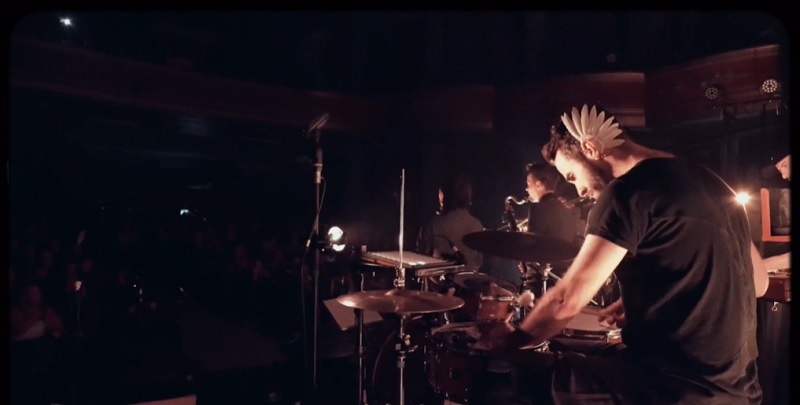
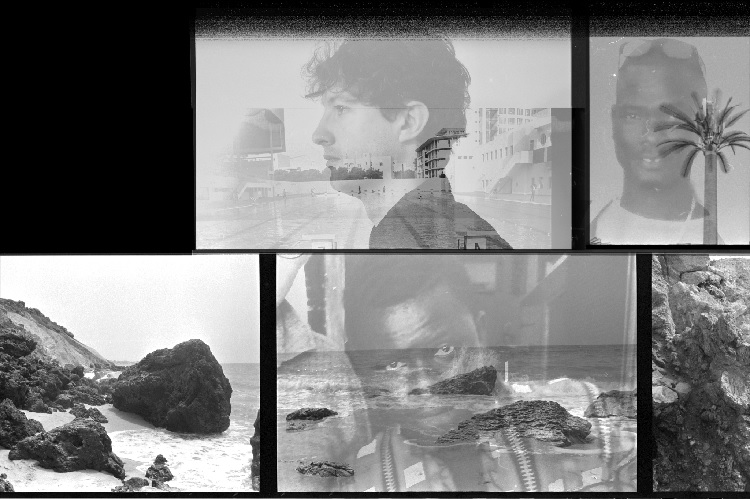
We are getting excitingly close to the release of Manu Delago‘s Circadian Live, his live album recorded last year while touring Circadian in Europe with his ensemble. Delago had already shared the majestic live version of ‘Uranus’ and now the single has been paired with an accompanying video. Watch it below.
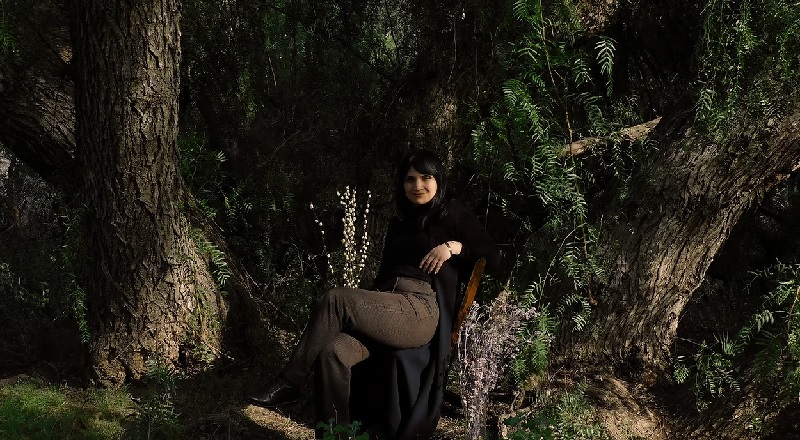
We´re less than two weeks away from the release of Cantus, Descant, the new album from Canadian LA based musician and musicologist Sarah Davachi. A double record, it features Davachi’s vocals on a couple of tracks for the first time and is also the first release on her own label, Late Music, an imprint of Warp Records. In a statement, Davachi described the concepts, recording and instrumentation of Cantus, Descant:
“The title of the record – ‘Cantus, Descant’ – has both literal and metaphorical meaning and, in a way, this is something like a concept album that addresses the relationship between the two. In medieval music, the Latin ‘cantus’ was used as a general term for unadorned singing or chant and by the end of the Middle Ages it came to represent the highest voice of a polyphonic choral texture, often improvised.
‘Descant’, at that time, was used in part to denote the structures of polyphony and counterpoint, the harmonious play of two or more voices against one another. Harmony is a musical device that is particularly meaningful to the material on this album, especially in the ‘Stations I-V’ series and its use of a sixteenth-century meantone temperament, but the inherent dialogue that persists between the individual (the cantus) and the larger time and space that it occupies (the descant) came to inhabit a more significant presence in the ideas and feelings that inform the album as well. In this way, the album takes solace in a suspension of the private within the collective, and the moment within the mythic.
I spent a lot of time while working on this album thinking about impermanence and endings, which led me to change my understanding of ‘vanitas’ and ‘memento mori’. These concepts arise allegorically across classical antiquity and Buddhist thought, among many other sources, but they were most obsessively expressed during the Renaissance in still lives and miniatures that contrasted the simultaneous passing and stillness of time. My interpretation is completely secular, softer, and more benign, but the awareness of a moment’s feeling remains. There’s a lot of symbolist imagery in the work titles, references to place and nature; the ‘Stations’ series in particular is a reconfiguring of the idea of states of being. The pervading affect on the album is one that gives reverence to the suspension, the epoché, a space where we welcome and attempt to reconcile impermanence. It is an opportunity to go inside – oneself, one’s sound – in order to simultaneously commune with our comforts and that which we mourn, perhaps not unlike the function of a hymn.
This album focuses on the organ in its various forms as the central instrument – pipe organ, reed organ, and electric organ. There are four different pipe organs featured: a smaller one based on a design from 1479 that I recorded in Amsterdam, and three larger ones that I worked with in Chicago, Vancouver, and Copenhagen. The majority of the album uses the organ in Amsterdam (in the ‘Stations I-V’ series) as well as a large reed organ I’ve been composing with privately for a few years in Los Angeles. Most people are familiar with the overwhelming aspect of organs, their ability to fill a space and take the listener over, but I’m equally interested in the intimate and private nature of organs, which is also what I was sifting through here, especially with those two organs. The organ in Amsterdam was particularly inspiring for me since it’s tuned in a Renaissance meantone temperament (which is unfortunately fairly uncommon in early music revivals) and since its bellows are pumped by hand, by another individual, rather than by an electric blower. The combination of the two yields what I think are some of the most interiorized and psychedelic textures I’ve ever experienced from an instrument. The minutiae of space and that sense of dialogue between near and far is I suppose another iteration of the cantus-descant metaphor that ended up being a more literal reference in the record. I’ve long been interested in the Renaissance approach to texture and timbre, and ideas about suspension that you see in a lot of sacred music, so I went a bit further into that here.
The first recordings I made for this record were actually back in the summer of 2017, which I gathered in Vancouver via an instrument I had had the privilege to work with on a regular basis since about 2013. I knew at this time that I was just beginning to enter a period of intense exploration, so I spent 2018 figuring out how to articulate my voice within the organ, what I wanted to say with the instrument and the space around it. I had a lot of wonderful opportunities in live performance to do this, so most of my organ shows that year were various studies on a few different gestures, sometimes incorporating other instruments like horns, the voice, strings, or electronics. I began recording the rest of the album in earnest in February of 2019, and wrapped with the acoustic organ recordings in August of that year in Amsterdam. The studio work came a bit later in the fall of 2019, at my home studio (‘Alms Vert’) in Los Angeles. My love of electric organ runs parallel to my love for orchestral textures and that style of production in popular music, and tape-based technologies like the Mellotron and echo devices. There’s a lot of personal catharsis imbedded in this record, and the two songs that I ended up creating actually felt like a really nice foil to the instrumental structures that I’m better known for.”
Ahead of the album release on September 18th, Davachi is offering album track ‘Midlands’ with an accompanying video, directed by Dicky Bahto. Immerse yourself in the music.
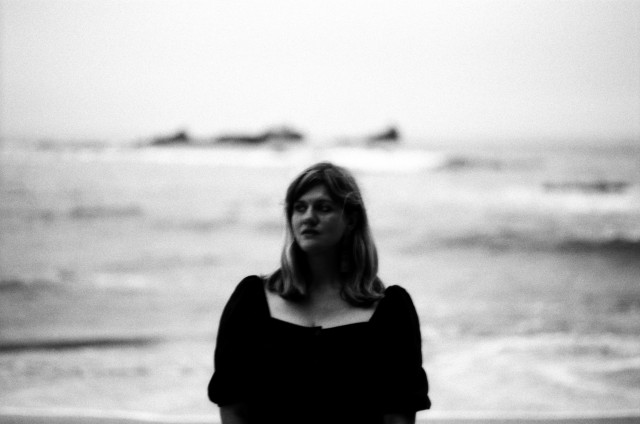
Earlier this summer, Mary Lattimore announced the release of a new album entitled Silver Ladders, following her acclaimed 2018 Hundreds of Days. The record came to life with the help of Slowdive’s Neil Halstead, whom she met at one of her festival appearances. The LA-based experimental composer and harpist had previously shared the sublime ‘Sometimes He’s In My Dreams’, and she is enticing us again with new single ‘Pine Trees’. Lattimore had this to say about it:
“Pine Trees is named after a quiet cluster of trees by the sea on the island of Hvar in Croatia. This song was created in Los Angeles at home, but crystallized in the studio with Neil’s help, where he took away layers of the demo that felt unnecessary, bringing out other layers to the front that had been hidden. This song feels like a testament to his producing in that, through more objective listening, a subtler light could shine through that I hadn’t seen in it before.”
Listen to ‘Pine Trees’ below an grab the album when it’s out on October 9th through Ghostly International.
Epik, Didaktik, Pastoral, the brand new album from composer and guitarist extraordinaire Samuel Hällkvist, is one of the most thrilling surprises of this summer. Released last week through BoogiePost / Burning Shed, the album is a wild and wondrous ride, filled with exciting and unexpected shifts throughout its ten original compositions, and flirting with a variety of genres and influences, from jazz and country to metal and electronic. Fluent in both composition and improvisation, Hällkvist displays his staggering inventiveness, offering a bold and refreshing contemporary album, bursting with sound colours and grooves.
To bring Epik, Didaktik, Pastoral to life, Hällkvist enlisted the help of a slew of talented players, including trumpeters Yazz Ahmed, Noel Langle and Luca Calabrese, bass players Dick Lövgren and Anne Marte Eggen, Knut Finsrud on drums and Katrine Amsler on sound design and programming.
For an exhilarating taste of the album, here’s one of the album tracks, ‘100 Takter med Piano’.
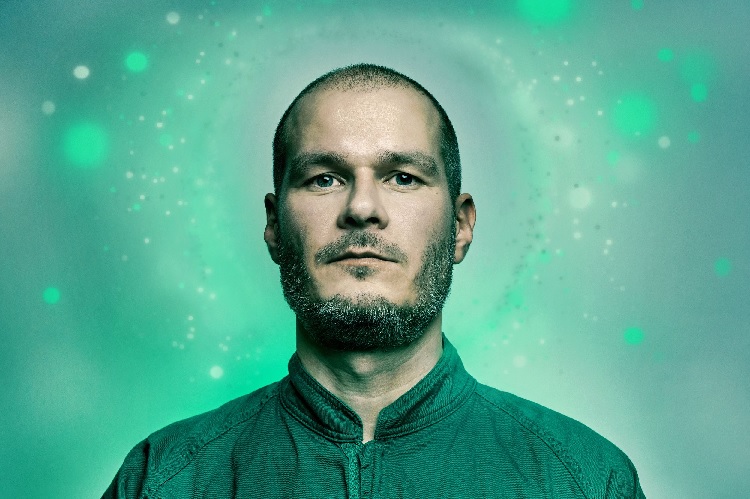
Known for his membership in Portico Quartet and Szun Waves, and a range of other collaborations, multi-instrumentalist Jack Wyllie has unleashed a new collaborative project called Paradise Cinema, featuring Khadim Mbaye (saba drums) and Tons Sambe (tama drums). Paradise Cinema is also the title of their debut album, recorded in Dakar, Senegal. “I had a lot of nights in Dakar when the music around the city would go on until 6am”, described Wyllie about his experience. “I could hear this from my bed at night and it all blended together, in what felt like an early version of the record.”
Paradise Cinema will see the light of day on October 9th through Gondwana Records but we can already hear the wondrous title track. Wyllie explains the inspiration behind it:
“There are a handful of old cinemas in Dakar – these big modernist buildings dotted around the city built around independence. They’re old and derelict now, but feel to me like monuments to that period, when the city was flooded with utopian ideas about its potential futures.”
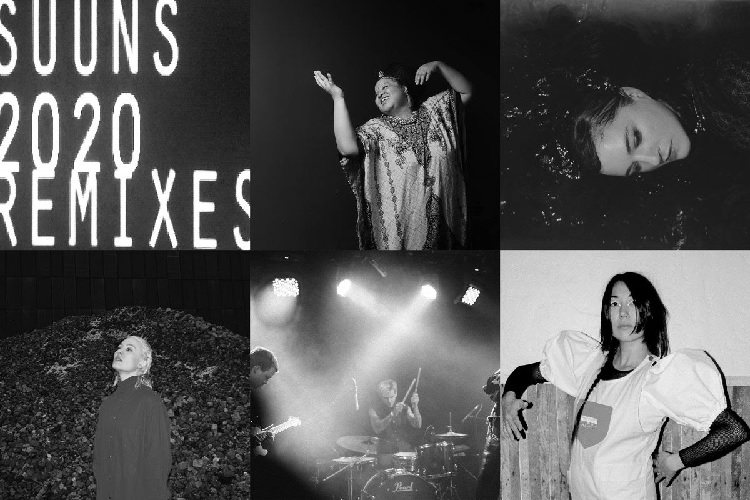
Last month Suuns unveiled a remix project that saw them invite other musicians they admire to remix ‘2020’, lifted from their 2013 album Images Du Futur. The Montreal based quartet are releasing these remixes digitally on Bandcamp on a Pay What You Can basis, with all proceeds going to the NAACP. Sharing the project in instalments, the first one featured remixes from Kelman Duran; Vive La Void; Greg Saunier; KRAMER, and Brian Case.
Now they have unveiled five new versions of ‘2020’ remixed by Welsh singer-songwriter Cate Le Bon; Chicago-based clarinetist, vocalist and composer Angel Bat Dawid; ethereal experimental artist Julianna Barwick; drummer Kristopher Bowering, and Los Angeles songwriter and multi-instrumentalist SASAMI. Take a listen to Cate Le Bon’s remix below and head over to bandcamp to hear the other remixes.