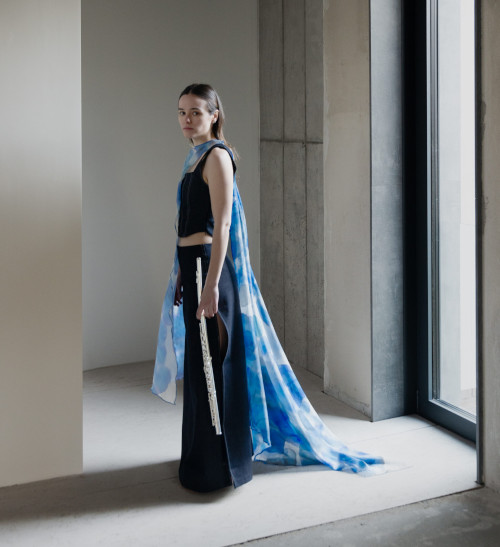
An incredibly talented and forward-thinking artist, Polish-Hungarian flutist and saxophonist Juli Deák has been forging a singular path through a physical and exploratory approach to sound. Merging classical, contemporary and jazz traditions, while embracing improvisation and folk influences, her work places breath at the very core, both as technique and expression. This comes into full view on her recently released stunning debut Brisk, a mesmerizing, intimate and immersive album recorded in a Budapest church, where ideas only fully revealed themselves in performance. Drawing on years of collaboration across various ensembles and collaborative projects, Deák’s work is rooted in discipline yet constantly unfolding, fueled by curiosity and a willingness to push into the unknown. We’re beyond excited to share the magnificent mixtape she put together for us this month, giving a nod to some of the sounds and artists that help shape her own unique sonic world. Press play and enjoy.
- Qiyan – Una mantica de Ruda
[Hunnia Records] - Jakob Bro – Daybreak
[Loveland Records] - Emingó – Change
[XLNT Records] - Alex Zethson / Johan Jutterström – It could (Etude 23)
[thanatosis produktion / Astral Spirits] - Nagy Emma Quintet – One By One
[Up Music Budapest] - Haldamas x Hulajdusza – Ne szólíts ki Uram készületlen
[Fonó Budai Zeneház] - Le Cri du Caire – Splendid tales
[Les Disques du Festival Permanent] - YOM – Elegy For The New Born
[Komos] - Raphael Rogiński – Lonnie’s Lament
[Unsound]